The debate surrounding community cat populations is often fueled by misinformation, fear, and outdated concepts. On this No Kill page, we believe in true ecology, humane solutions, and rejecting the blame placed on both cats and the public.
This post breaks down the facts and counters the common arguments used against life-saving TNR (Trap-Neuter-Return) programs.
1. Population Growth: The Myth of Uncontrolled Breeding
A major fear-mongering tactic is claiming that feral cat numbers spiral "out of control." This is based on a fundamental miscalculation that ignores the harsh realities of outdoor life.
- The Flawed Math: Claims about exponential growth are based only on a cat's reproductive potential (how many litters they could have), ignoring one critical factor: mortality.
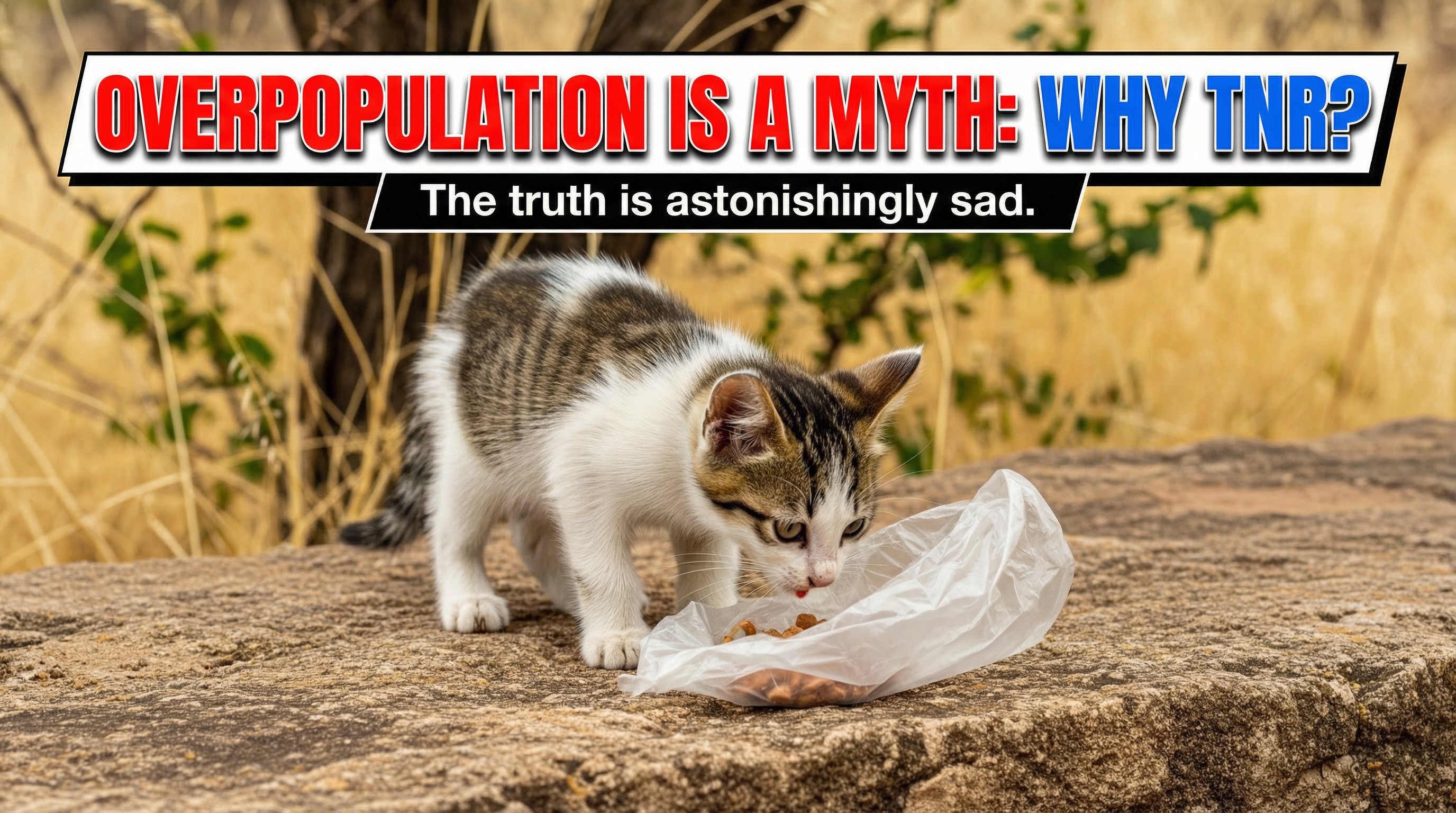
- The Mortality Reality: Studies show that feral kittens face an extremely high mortality rate—often exceeding 75%—due to exposure, disease, parasites, and predation. This is the sad truth: THE KITTENS DIE.
- Net Growth is Slow: Because of this high juvenile death rate, the actual net growth of an unmanaged feral colony is often slow or non-existent. Some colonies go years without any surviving kittens. This data confirms that uncontrolled overpopulation is a myth—nature itself already limits the numbers, often through brutal means.
TNR simply replaces this brutal natural control with a humane, guaranteed form of population decline by eliminating births entirely in these high risk areas.
2. Genetics and Ethics: Why TNR is not Eugenics
Some opponents argue that sterilizing an entire colony is akin to eugenics or causes genetic harm. This comparison is ethically inappropriate and scientifically incorrect in this context.
- Eugenics vs. Welfare: Eugenics is the selective breeding for specific inherited traits. TNR is a veterinary intervention focused on animal welfare to prevent the suffering inherent in endless birth cycles. It is not about selecting who is "fit to live," but about ensuring the fixed, unadoptable cats can live out their natural lives peacefully.
- TNR Stabilizes Existing Genetics: While TNR doesn't introduce new genetic diversity, its goal is to stabilize the existing population by preventing more suffering and births. The severe moral equivalence drawn to human atrocities is unwarranted and distracts from the humane purpose of TNR.
3. Cats and History: True Ecology in Human Environments
Arguments against feral cats often ignore history and the definition of a human-modified ecosystem.
- Long-Term Presence: Domesticated cats are not recent invaders; they have been present in virtually every human-modified ecosystem since humans first began to settle. For thousands of years, cats and people have co-existed, often in symbiotic relationships controlling rodents.
- Nature Adapts: True ecology acknowledges that the local wildlife in areas heavily modified by humans (like cities, suburbs, and farmland) has already adapted to the consistent presence of cats, just as they have adapted to dogs, vehicles, noise, and artificial light.
- No Blame: Our mission does not blame the animals for existing, nor does it blame the public for feeding them. Instead, we advocate for proactive human management (TNR) to ensure humane co-existence in our shared environments.
🛑 Policy Failure, Not Public Blame: Crisis Management
When communities experience sudden, large spikes in unsterilized stray cat populations, it is a direct result of systemic failure or harmful public policy, not the natural reproductive rate of feral colonies. These crises—such as mass pet abandonment following a housing eviction or the failure of local governments to provide and support affordable sterilization—demand an urgent, targeted response. Furthermore, punitive ordinances that fine citizens for feeding or maintaining unsterilized pets often create financial barriers, driving pet ownership and compassionate care underground and making the problem impossible to track.
These situations require the opposite of punitive measures: they demand increased support for TNR. Banning feeding and TNR simply causes suffering, forces cats to disperse into new areas, and complicates future sterilization efforts. The ethical and effective course of action is always to focus on removing financial barriers and investing heavily in subsidized, accessible, high-volume TNR efforts to rapidly stabilize the population, thereby addressing the consequences of policy failure humanely and effectively.
The Conclusion
Every reason given by opponents to resort to lethal control against feral cats is either a lie or based on incomplete data. We do not need to kill. We need to support Trap-Neuter-Return as the most compassionate, effective, and ethically sound method to manage community cat populations.
.jpg)